Total 12'051 entries
The only database that includes
both broadcast and professional utility radio stations worldwide!
Improved 2026 edition
now displays utility stations' callsigns as well - see screenshot below
Today, thousands of professional digital data stations are active on tenthousands of HF frequencies. Cutting-edge technology is used for automatic data transmission over worldwide aeronautical, company, diplomatic, military, maritime, and NGO e-mail networks. Receiving and decoding these stations is far more fascinating than listening to broadcast radio stations. We've been leading in this field for 58 years! Below you will find a few examples of what can be really monitored today. Please note that the many sample graphics below demonstrate merely the typical layout of our products , i.e. not the current up-to-date 2026 data. Several hundred very recent screenshots can be found here.
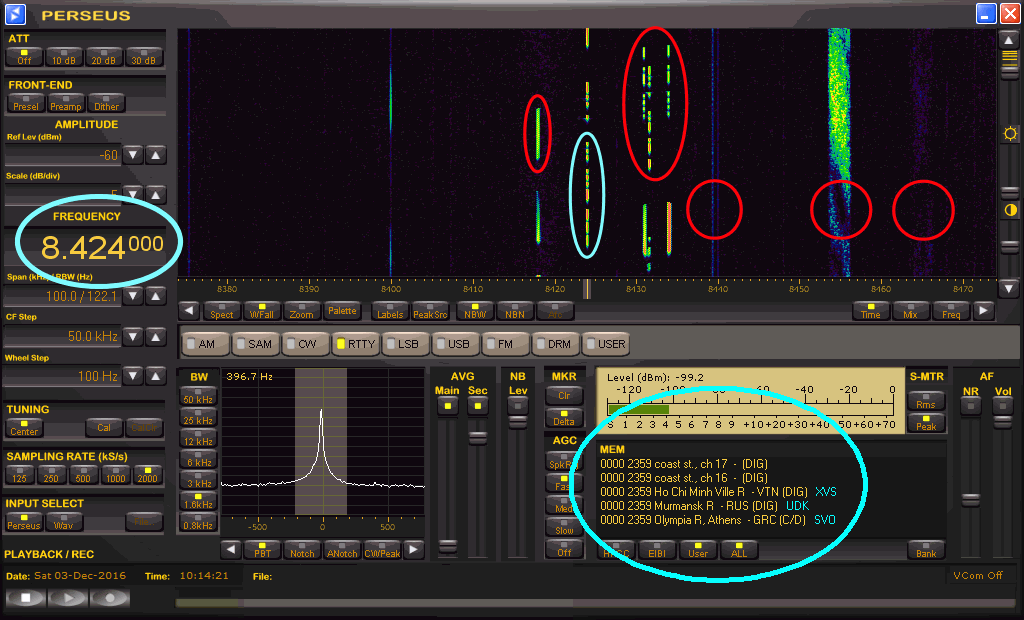
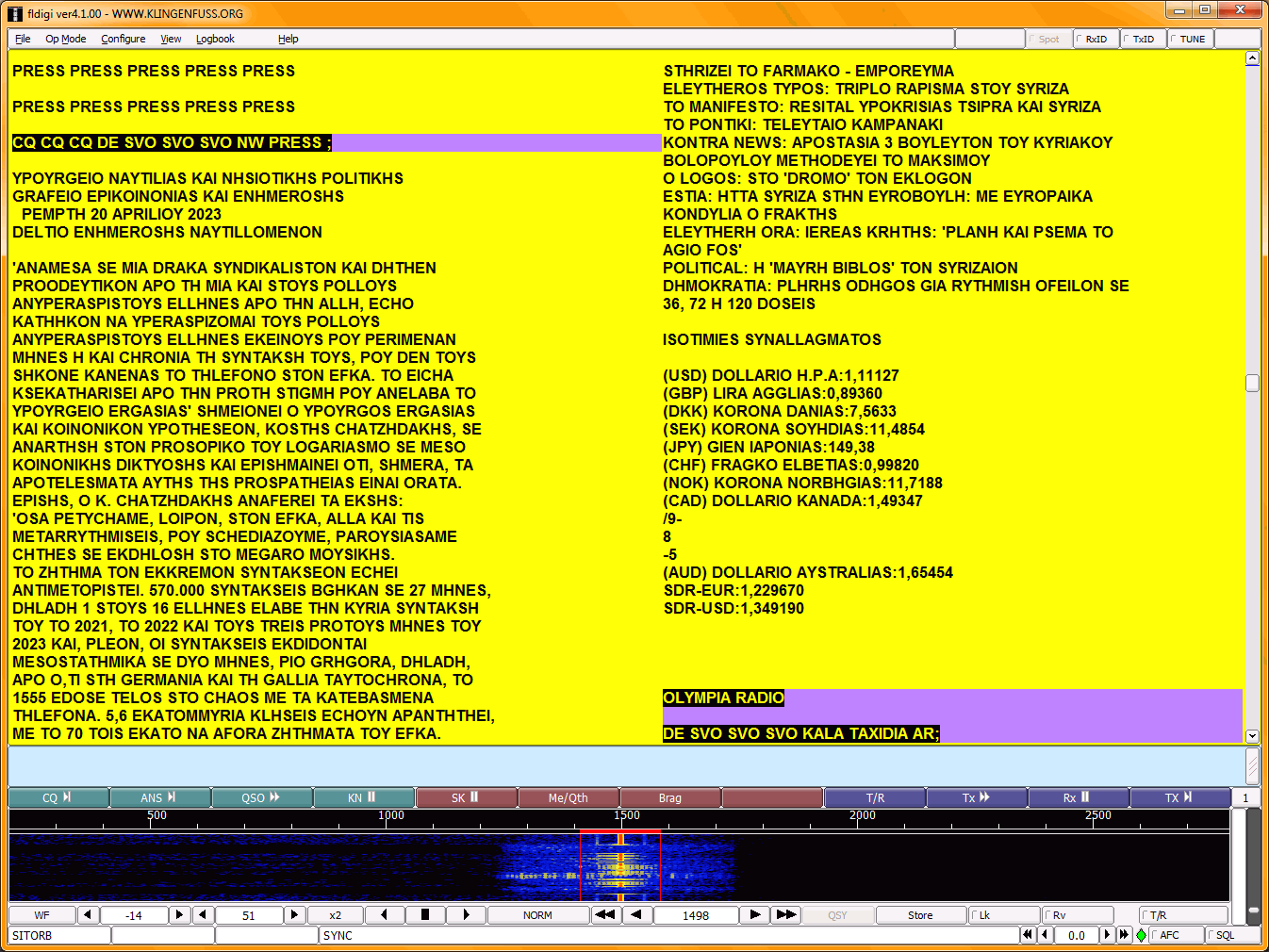
The frequency 8424 kHz used by coastal stations gives you two entries. The waterfall display here is 100 kHz wide and shows eight DIG stations in full detail, from left to right

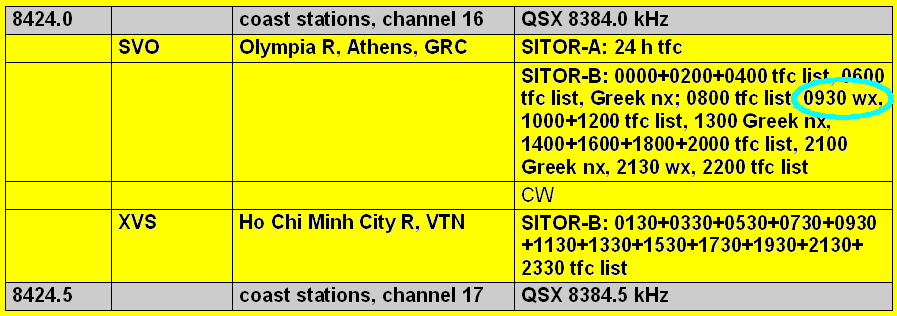
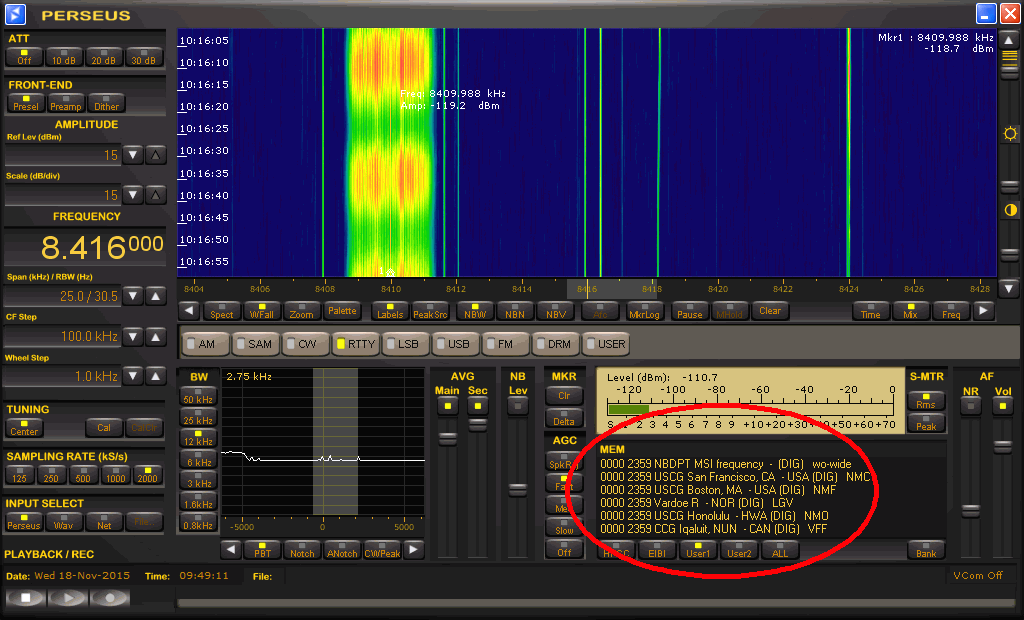
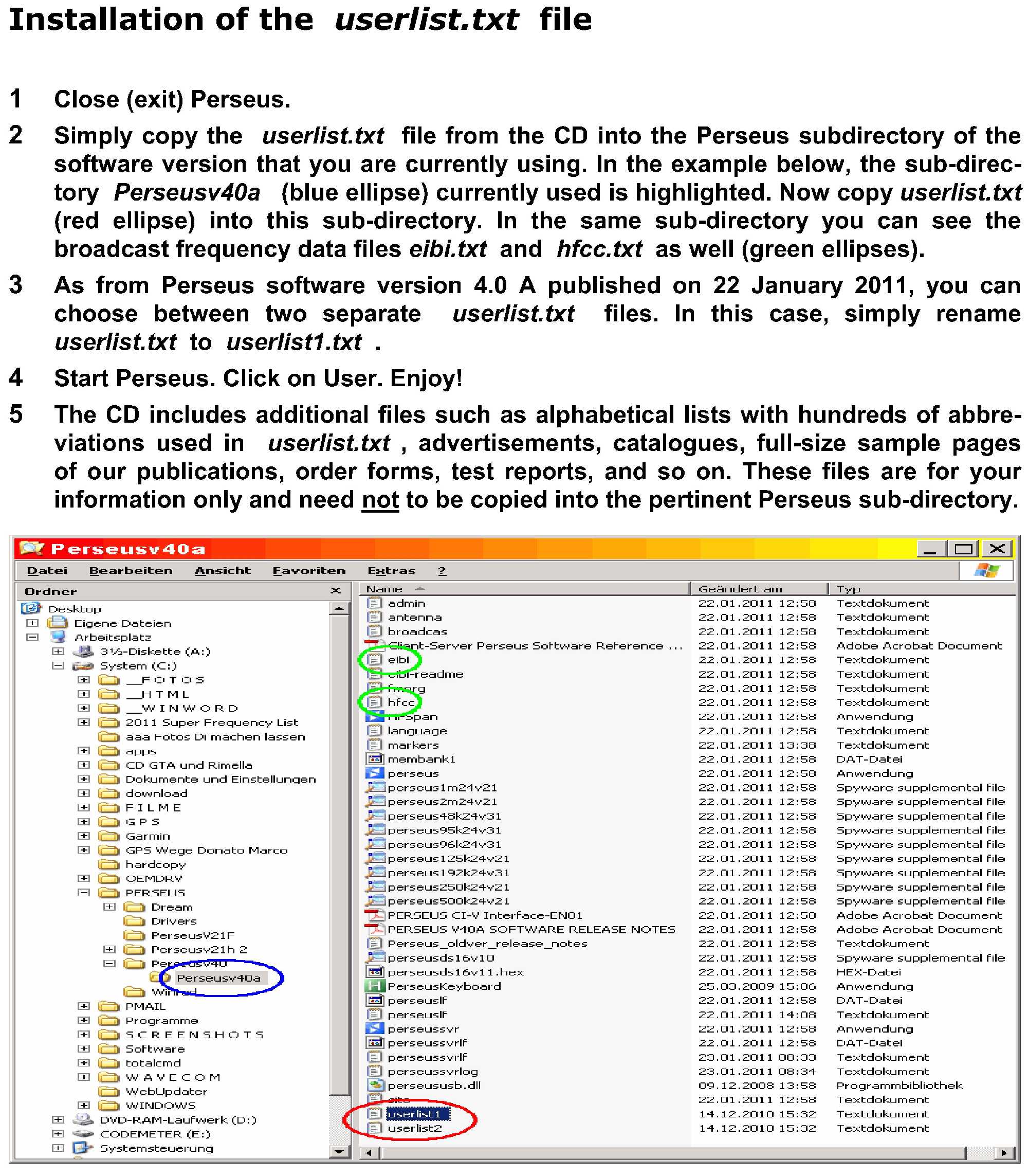
As from Perseus software version 4.0 A published in 2011, you can choose between two separate userlist.txt files. In order to use our userlist.txt file with 4.0 A and later, copy it into the Perseusv40a (sub-)directory, and rename it to userlist1.txt .
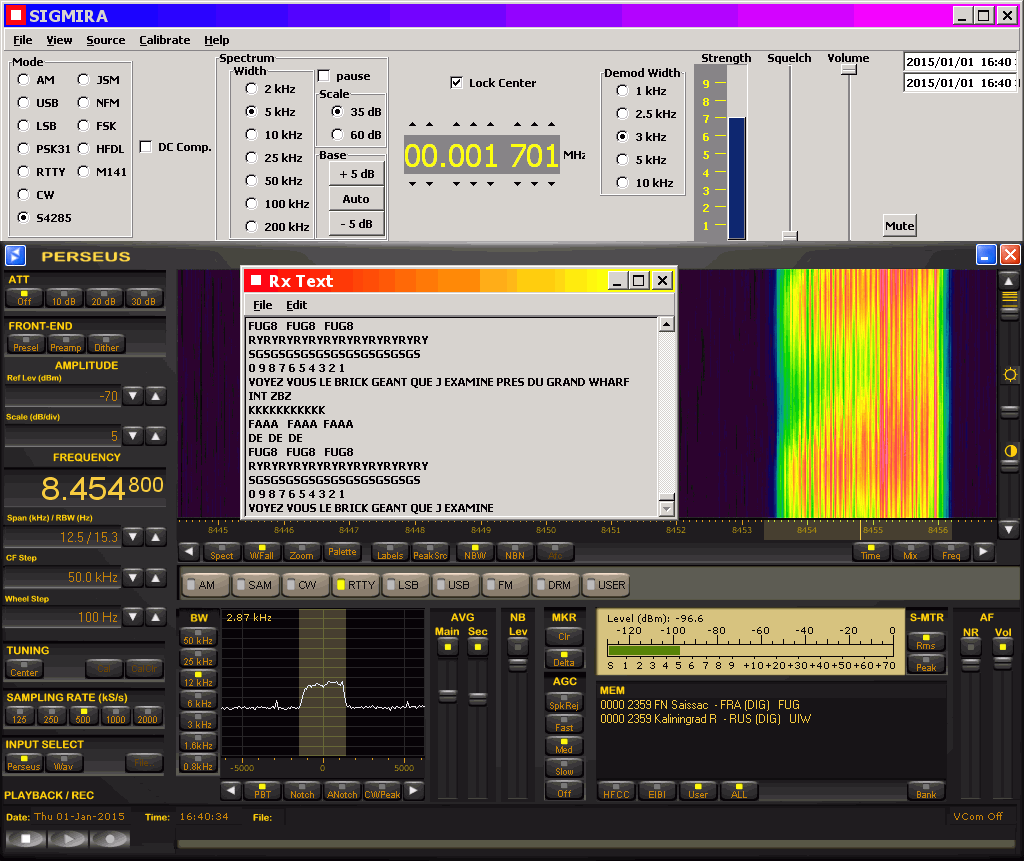
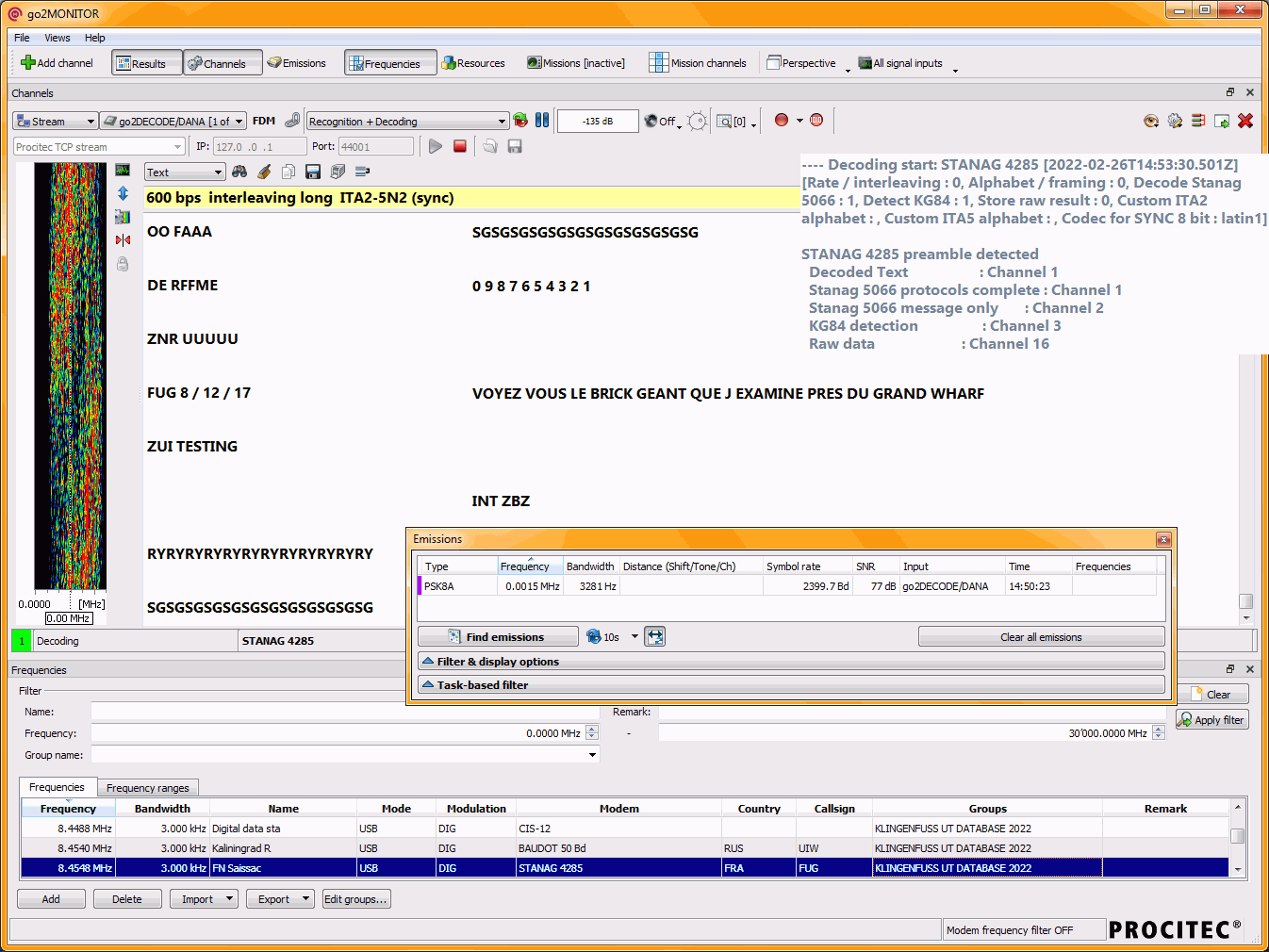
Now let's zoom on a typical PSK aggregate signal of station FUG on 8454.8 kHz, and decode STANAG 4285 by means of amateur decoding freeware SIGMIRA. The waterfall display here is 12 kHz wide and shows the complex aggregate and signal propagation fading in full detail. Note also the typical rectangular PSK FFT spectrum in the filter display. Below is a similar transmission decoded with a professional PROCITEC go2MONITOR system. Click to enlarge!
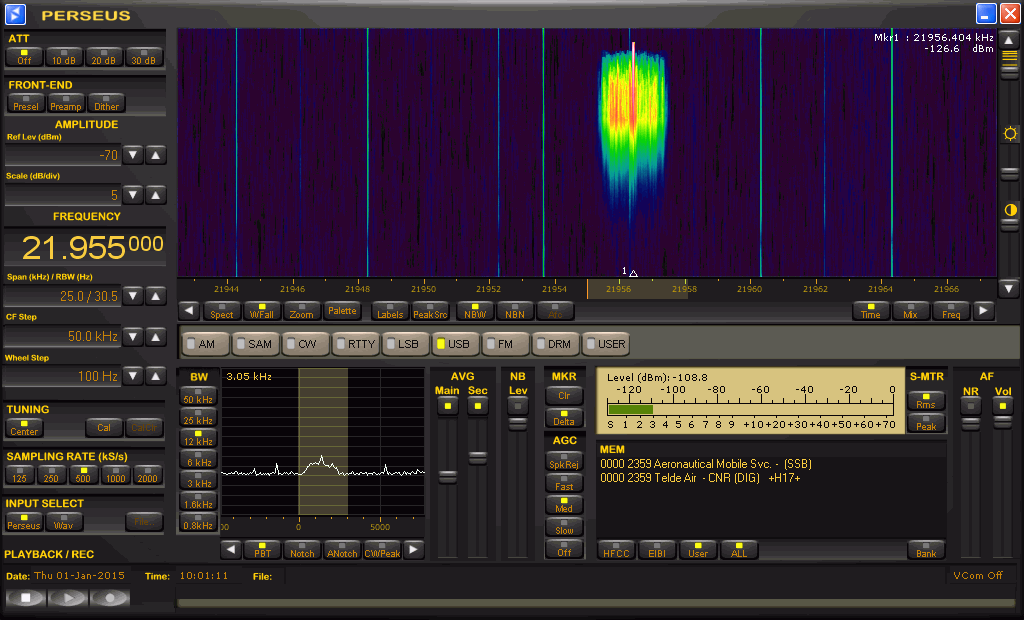
Another strong PSK signal on 21955 kHz. The 249 milliseconds 1440 Hz prekey tone on 21956.44 kHz, followed by a complex BPSK and MPSK aggregate burst, is clearly visible. This is ACARS via HFDL
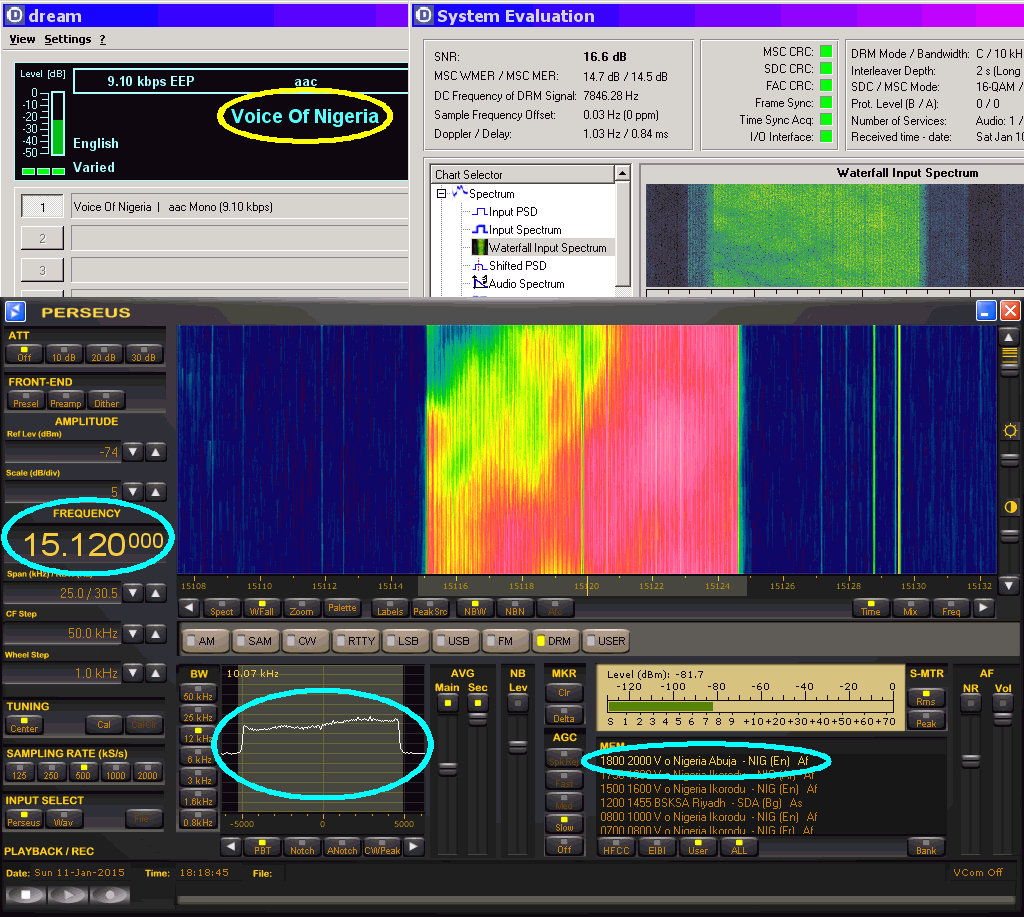
The frequency 15120 kHz gives you 5 entries among broadcast and utility radio stations. All these entries are perfectly scrollable. The ALL button, next to the User button, allows the display of all entries in the pertinent database, independent of the time of day, with entries at the actual reception time highlighted in bright yellow. The waterfall display here is 25 kHz wide and shows the wide PSK aggregate signal carrying the DRM broadcast of Voice of Nigeria, with "colourful" selective fading. Note also the typical rectangular DRM FFT spectrum in the filter display
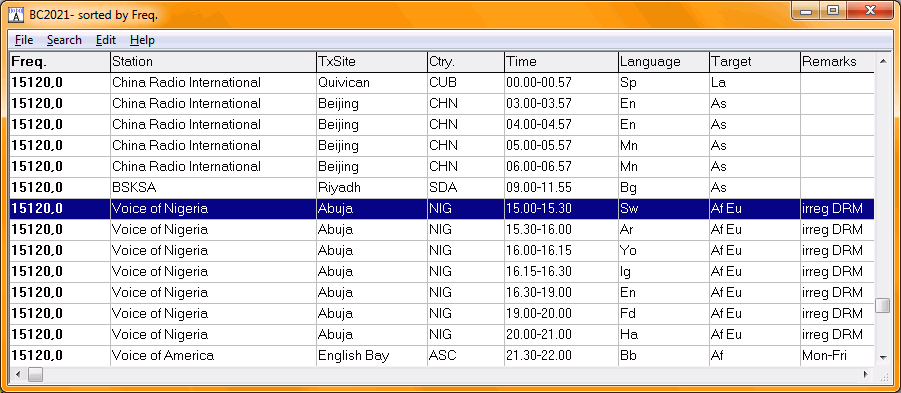
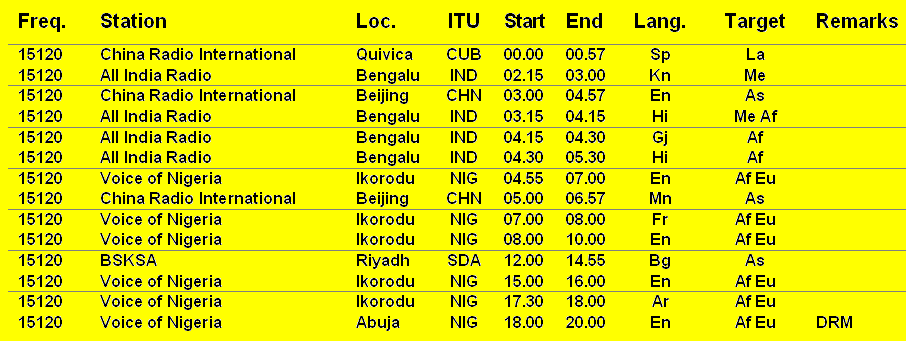
Just for the record ... the strictly required USERLIST.TXT format is rather inflexible and restrictive, and due to lack of space within the Perseus' graphical user interface that gives you a mere 280 x 80 pixels ...
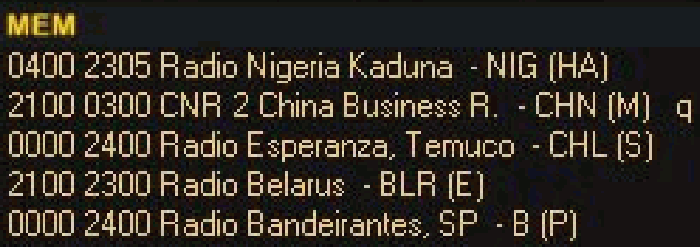
... it is limited to a total height of 5 scrollable (!) lines only, and to a total width of 82 characters per line, e.g. typically five small columns for Frequency, Time, Country, Station, and Language, and it is more or less incompatible with our detailed frequency lists of professional utility radio stations, i.e. the really interesting stuff as perfectly demonstrated here. What's more, because of these limitations

For perfectly edited broadcast radio station lists with a superb and unique ergonomic layout both in frequency and alphabetical order - acclaimed for decades and without any absurd restrictions - please refer to our 2026 Shortwave Frequency Guide. For a perfectly edited professional utility radio station frequency list with full details and exact schedules plus thousands of up-to-date reception times, please refer to our bestseller 2025/2026 Guide to Utility Radio Stations.

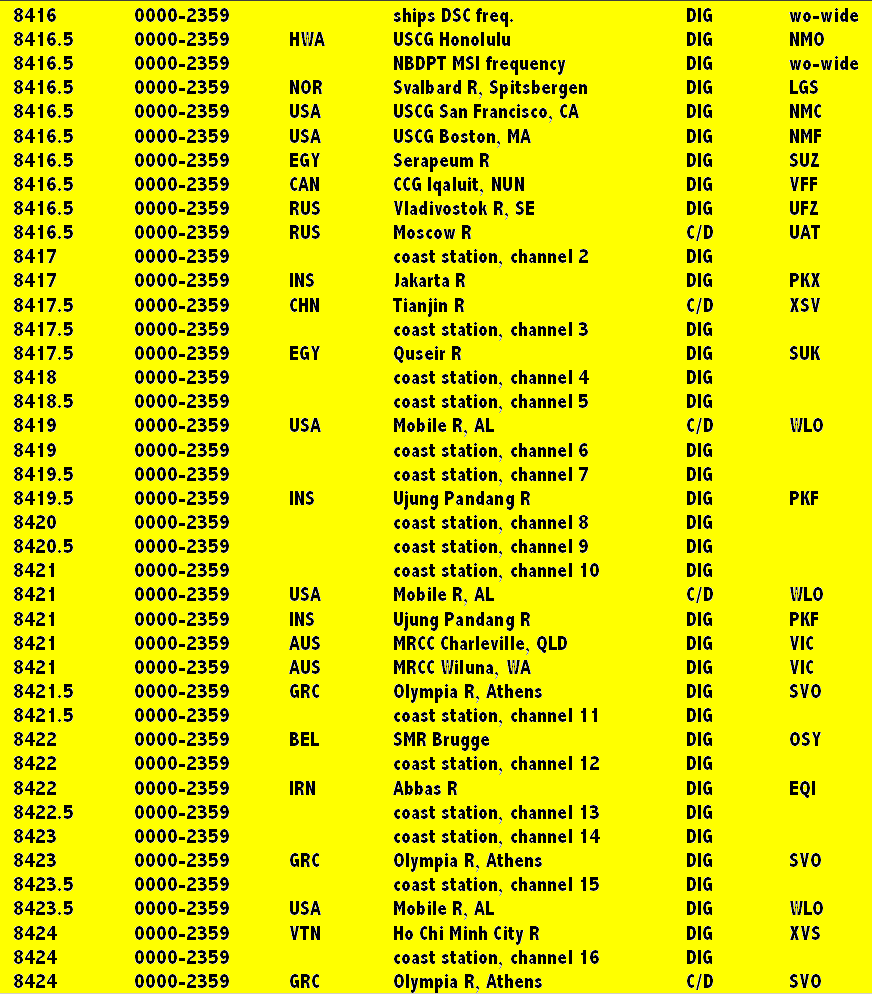
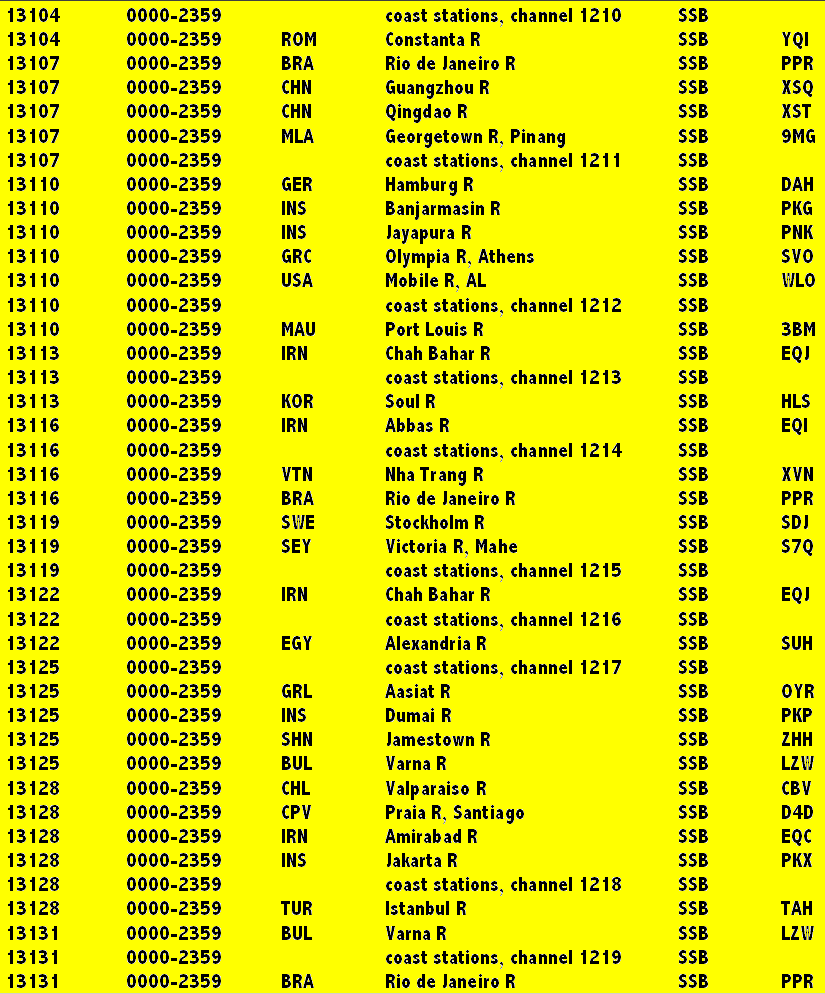
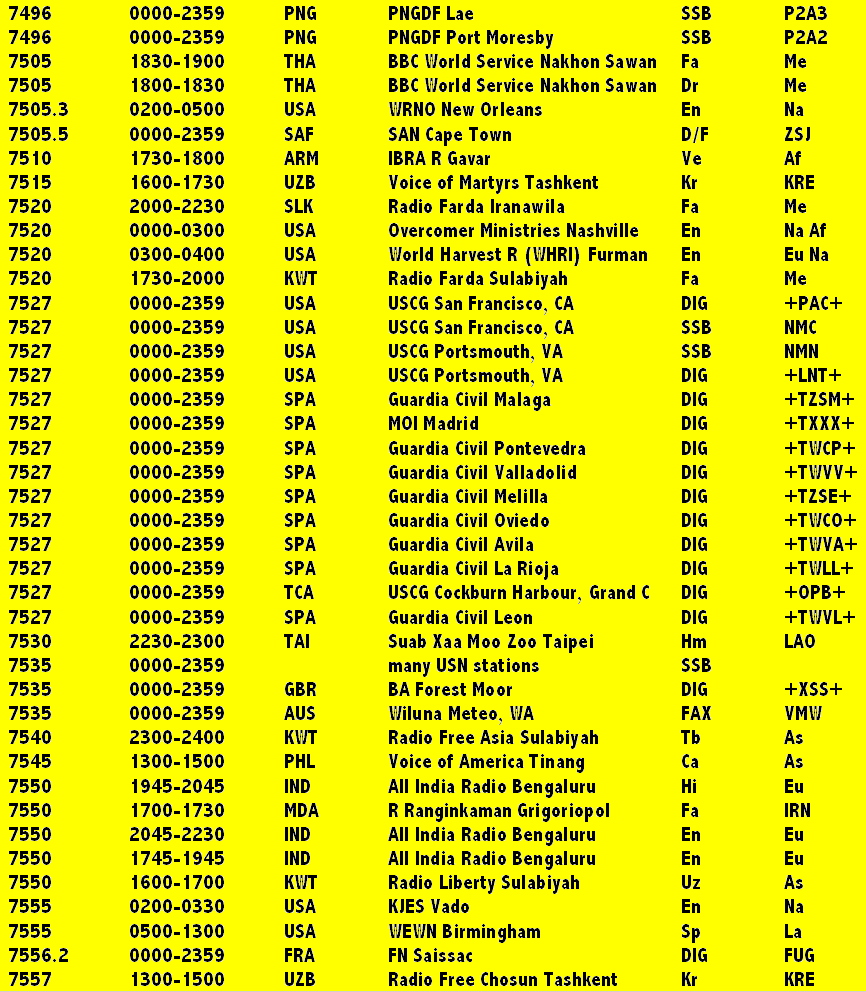
Needless to say, for decades we've used standard international three-letter codes for all countries worldwide defined in ISO 3166 ALPHA 3 and modified for the English language, e.g. AFG BRA GER SAF SPA SWE TAI, avoiding absurd abbreviations such as "AFS", "ARS", "D", "E" et al that are perfectly incomprehensible in today's English-speaking world, and we do use standard two-letter language codes defined in ISO 639 1 ALPHA 2 mnemonically modified for global use, e.g. En Sp Hi Sa Np Ur Po In Km Ku Do Fa as referring to the screenshot above.
What's more, our Super Frequency List on CD gives you a total width of 129 characters per line, that is 57 percent more information than a mere 82 characters. Enjoy!
The installation of our userlist.txt file is very easy. Click to enlarge!
Note that our frequency lists always refer to the centre frequency f0 as internationally agreed, and not to any offset. Again, USB is the professional standard setting and there are no amateur "modes" such as "CW", "FAX", "RTTY" et al!
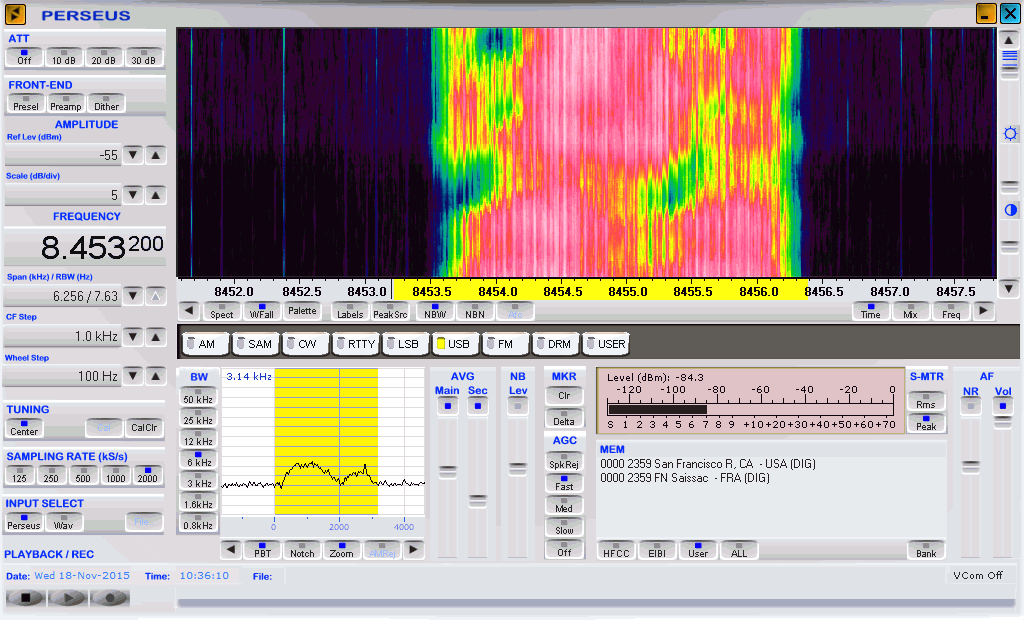
This would be our favourite GUI, with the frequency scale in the main window - i.e. the most important parameter at all that is virtually illegible in the current GUI! - dramatically improved.
As you can see from the samples above, the PERSEUS LF-HF Software Defined Receiver, with its latest software version, is pretty good. With our proposals implemented - and more to come! - it could be considerably improved for the reception of the really interesting stuff! For less than 1,000 EUR, its technical performance is probably as good as any of those traditional 10,000+ EUR/USD boat-anchor receivers from CUBIC, HARRIS, ICOM, JRC, RACAL, RS, TENTEC, and the like. Complimenti, ragazzi lagiù oltroalpe. È davvero un capolavoro!
For professional applications, the combination of a PERSEUS HF receiver and a digital data decoder such as PROCITEC's GO2MONITOR have drastically revolutionized traditional HF COMINT ELINT MASINT SIGINT working procedures. A GO2SIGNALS product located anywhere in the world can be addressed and controlled via Internet. The same goes for the latest versions of PERSEUS et al. What's more, the cost of around 10,000 EUR for one basic radio monitoring post, comprising e.g. a PERSEUS and a PROCITEC, is simply ridiculous.
And for the advanced amateur or hobbyist, PERSEUS and GO2MONITOR are just ... big fun!
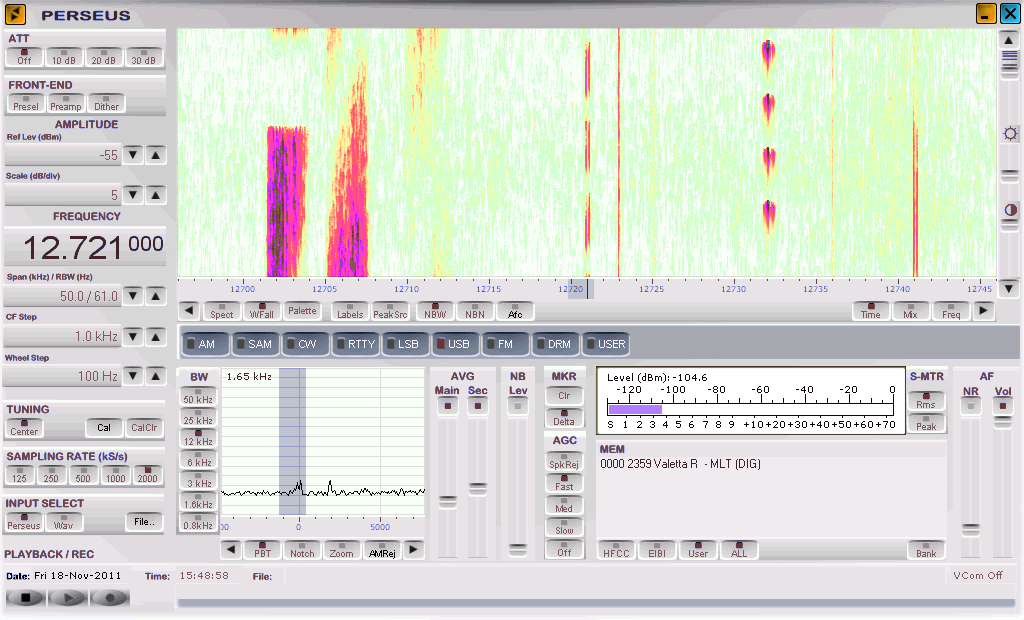
The frequency range around 12721 kHz shows several state-of-the-art digital data signals - the really interesting stuff:
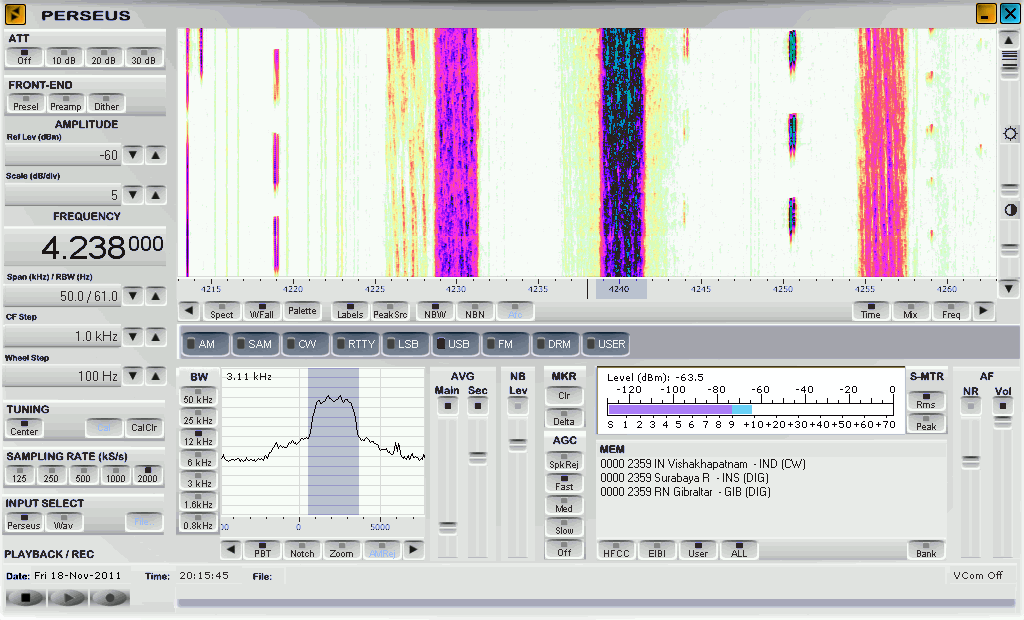
The frequency range around 4238 kHz shows no less than ten state-of-the-art digital data signals - the really interesting stuff:

Here we zoom on HEB carrying a PACTOR-3 variant emission on 4250.5 kHz. The 18 different tones spaced 125 Hz are clearly visible, occupying a total spectrum of 2125 Hz.
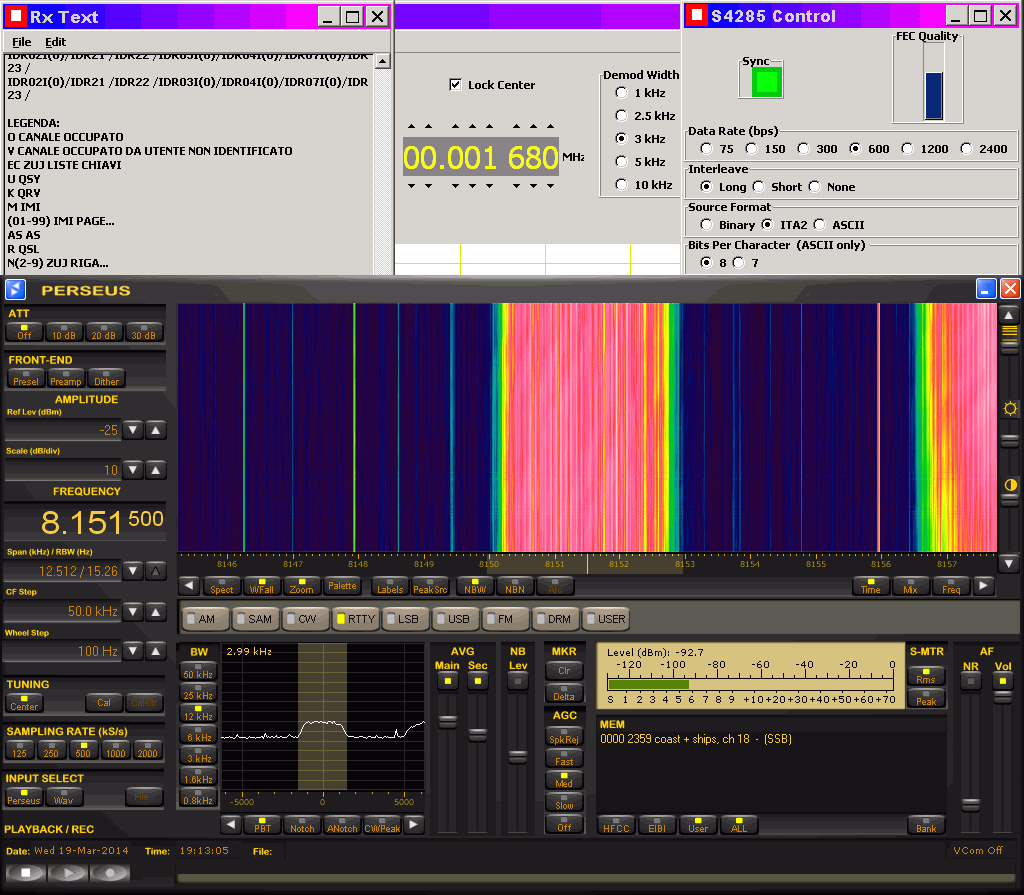
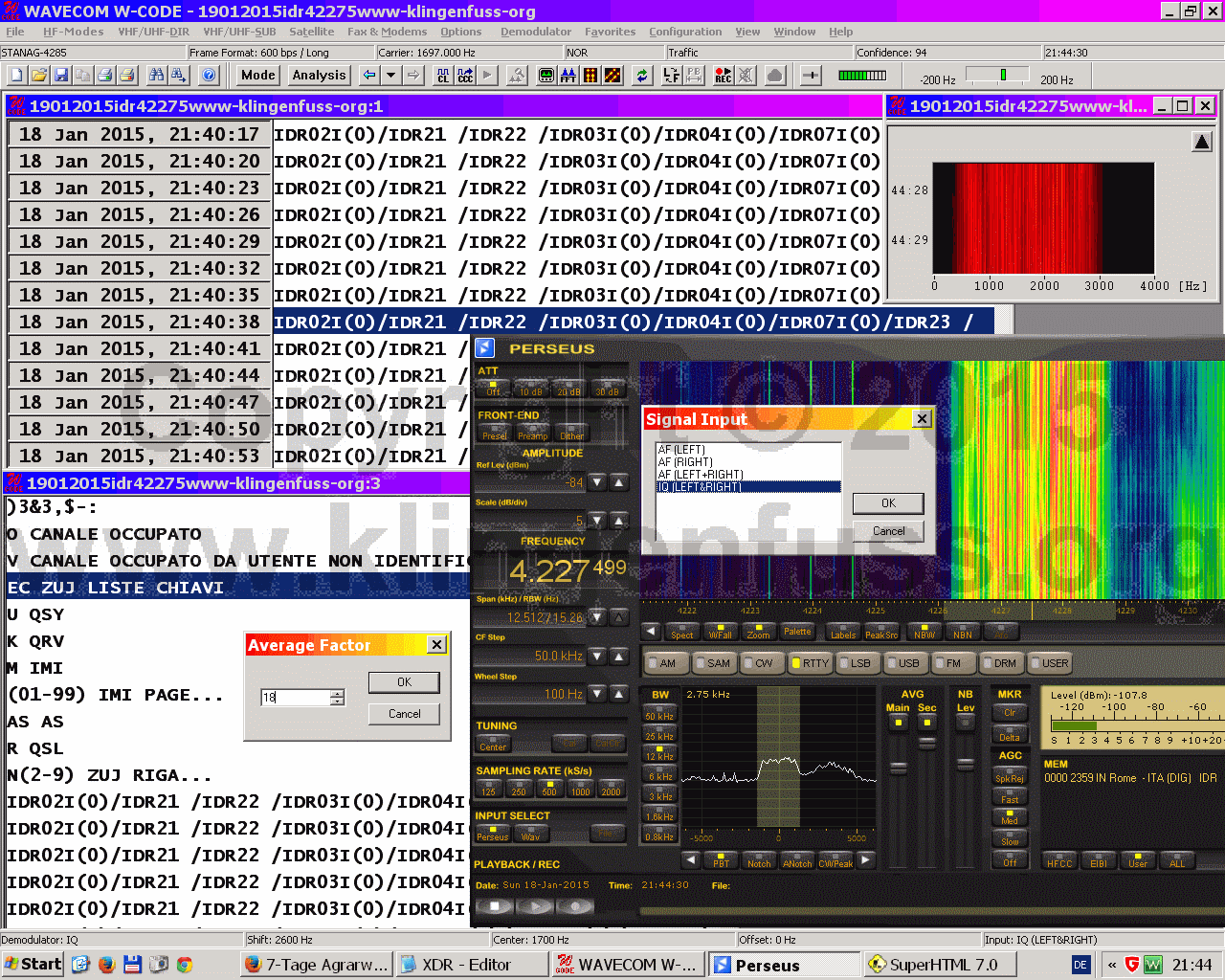
Here we zoom on the PSK aggregate signal of station IDR on 8151.5 kHz, and decode STANAG 4285 by means of amateur decoding freeware SIGMIRA. The waterfall display here is 12 kHz wide and shows the complex aggregate and signal propagation fading in full detail. Note also the typical rectangular PSK FFT spectrum in the filter display. Below is the same transmission on 4227.5 kHz decoded with a professional WAVECOM W-CODE system. Click to enlarge!
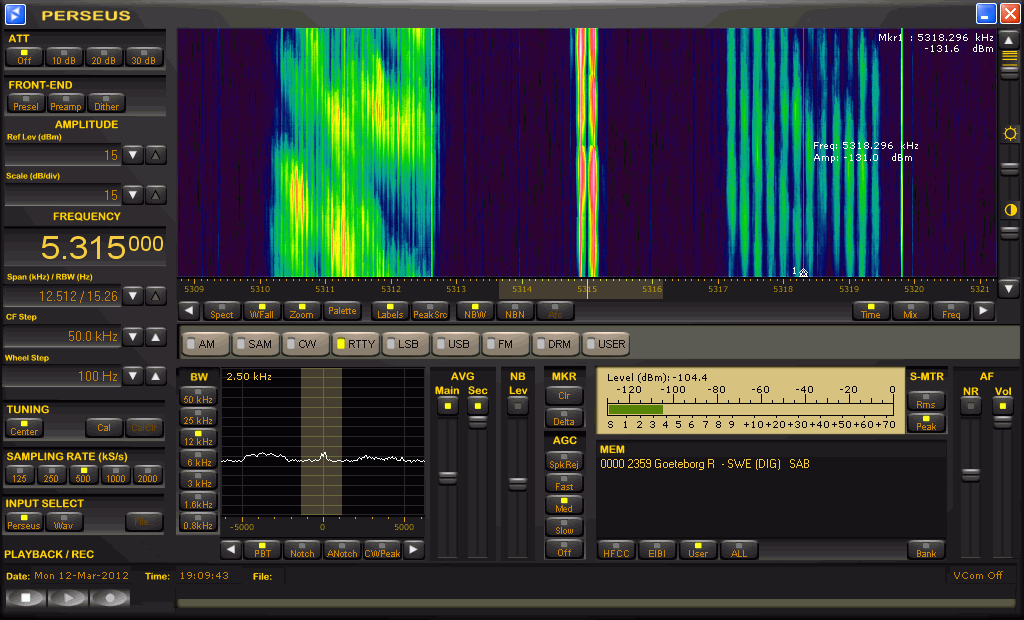
Here we can see three totally different state-of-the-art PSK signals within a bandwidth of less than 10 kHz: a STANAG 4285 aggregate on 5311.5 kHz, a Globe Wireless OFDM emission on 5315.0 kHz, and a CIS-12 PSK signal on 5318.3 kHz.
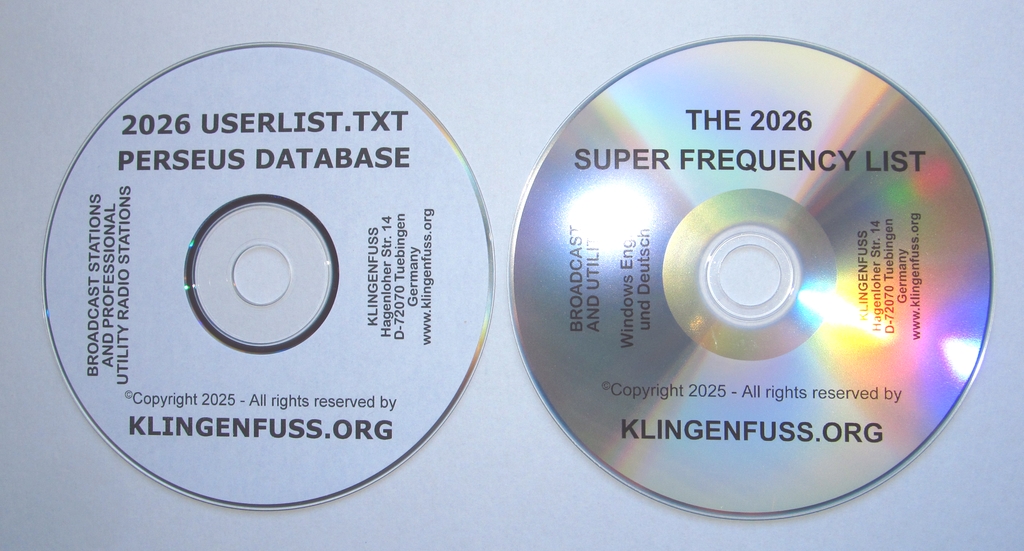
Since its introduction in 2009, we've seen that many customers order both our USERLIST.TXT database plus the Super Frequency List on CD. For your convenience, we've introduced a new package deal for both products combined that saves you 10 EUR. For details and even more package deals please see our price list.